

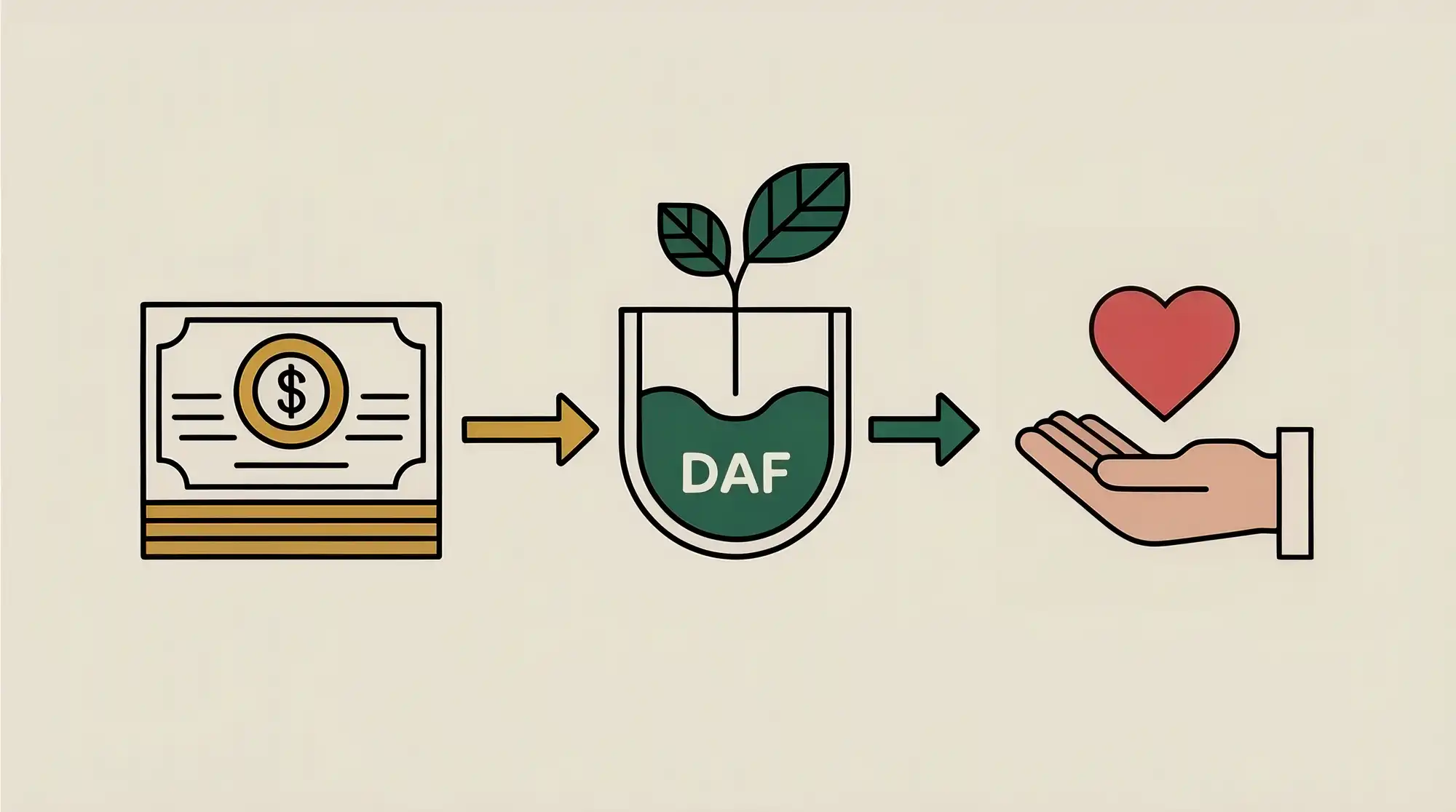
Most donors write a check to receive a tax deduction and then move on. There’s nothing wrong with this approach, but it leaves a significant amount of potential tax benefits untapped.
A Donor-Advised Fund (DAF) is a charitable giving account that allows you to contribute funds now, claim an immediate tax deduction, and distribute the money to charities at your own pace. While you decide the ultimate destination of your donation—whether next month or five years from now—the assets can grow tax-free through the investment options you choose.
This is the real advantage of donating appreciated investments instead of cash. For example, if you purchased stock for $5,000 and it is now worth $15,000, selling the stock would trigger capital gains tax on the $10,000 gain. However, if you donate the stock directly to a DAF, you eliminate that tax liability entirely while still claiming a deduction for the full $15,000 fair market value. At a standard 15% long-term capital gains rate, this alone saves $1,500 in taxes—not counting the additional income tax deduction for the entire $15,000 contribution.
Timing also matters. In high-income years—such as when you receive a bonus, sell a business, or realize a large capital gain—you can contribute more to your DAF to secure a tax deduction at the most advantageous time. You can then grant the funds to charities as needed, maximizing their impact while the assets continue to grow.
Deduction limits apply: cash contributions are deductible up to 60% of your Adjusted Gross Income (AGI), and appreciated securities up to 30%. Any excess can be carried forward for up to five years.
If you already own appreciated investments, the case for establishing a DAF is clear. Firms like Fidelity, Charles Schwab, and Vanguard offer DAF services with low or no minimum initial contributions, and the setup process takes less than an hour. The tax savings you gain can provide long-term benefits for years to come.