

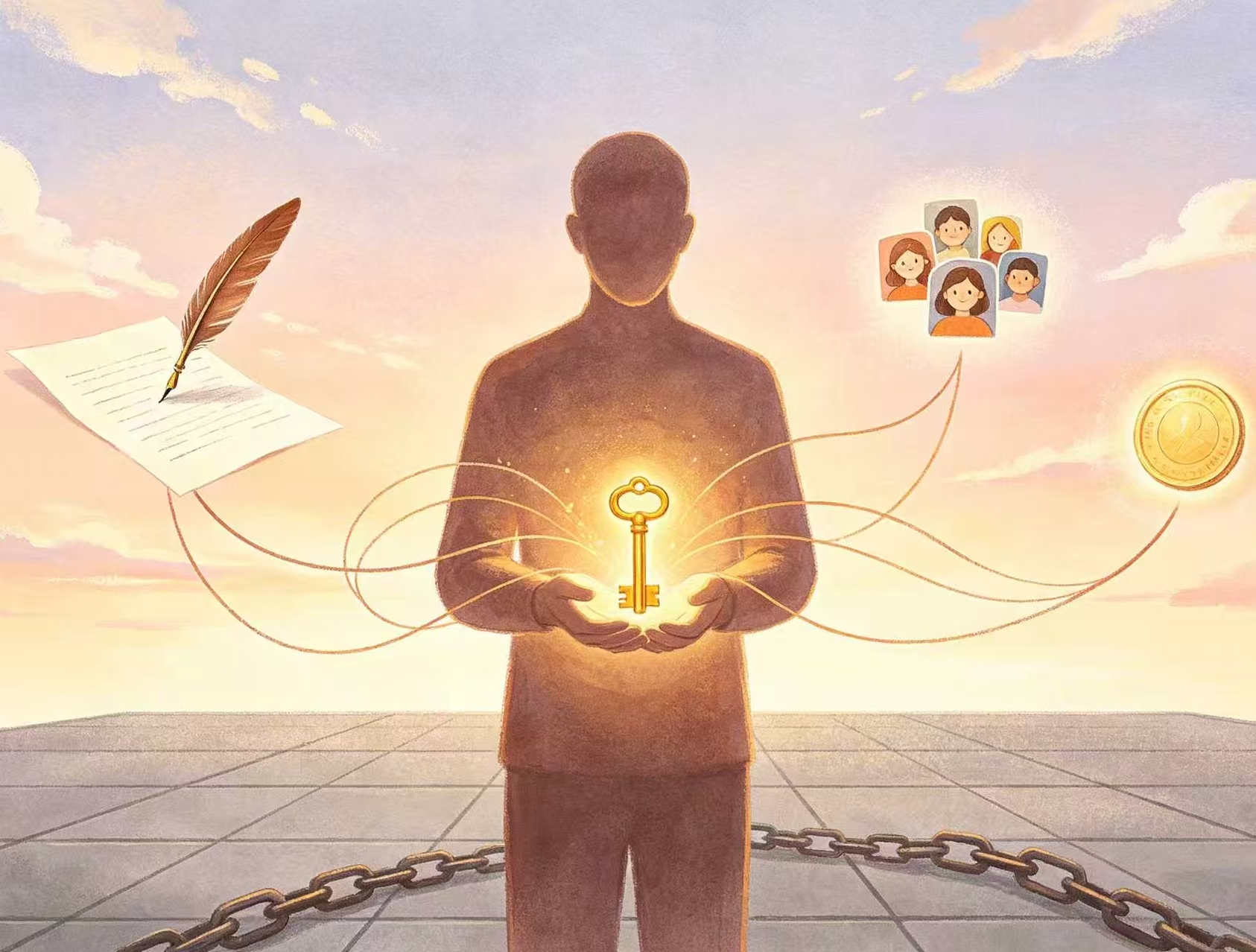
For over a decade, the social media landscape has been dominated by a handful of centralized platforms that have aggregated billions of users, transforming personal expression into a commodity. These platforms own the social graph, the content, and the algorithms that shape public discourse. Users are not customers but products, their data harvested and sold, their feeds manipulated by engagement-maximizing black boxes, and their digital identities locked within walled gardens that can disappear or be deplatformed at the whim of a corporate entity. Decentralized social media, powered by blockchain technology and open protocols, is staging a profound counter-movement—one that seeks to return ownership of digital identity, content, and social connections to individuals.
At the heart of this shift is the concept of a user-owned social graph. In the traditional Web2 model, if you leave a platform, you lose your followers, your posts, and your entire network of relationships. Decentralized social protocols such as Lens Protocol and Farcaster upend this by storing the social graph on-chain or on decentralized storage, making it portable. Your followers, your posts, and your reputation are no longer tied to any single application; they are tokenized assets that you can carry with you across any interface that supports the same protocol. This creates an open ecosystem where developers can build diverse front-end experiences, and users can choose or even build their own, knowing that the underlying network of connections remains intact.
The economic model is equally transformative. Instead of platforms extracting all advertising revenue and returning none to the users who create the value, decentralized social media enables content monetization through tokens, NFTs, and micropayments. A creator can set a subscription fee in a stablecoin for exclusive content, or issue a personal token that fans can hold to show support and gain access to a private chat. A thoughtful comment can be rewarded with a tip, and a viral post can earn a share of the attention economy’s value directly, without an intermediary taking a 30% cut. Smart contracts handle these transactions transparently, ensuring that creators are compensated fairly and instantly, on their own terms.
Privacy and censorship resistance are also fundamental pillars. In a decentralized social network, there is no central server that a government or corporation can pressure to take down content or hand over data. While this raises legitimate concerns about the spread of illegal or harmful material—concerns that the community must address through decentralized moderation and reputation systems—it also protects dissidents, journalists, and activists whose speech is targeted by authoritarian regimes. Users can employ decentralized identity solutions to prove they are a unique human without revealing their real-world identity, striking a balance between accountability and privacy.
The technological underpinnings involve a combination of blockchain for identity and tokenization, decentralized storage networks like IPFS and Arweave for content, and increasingly, layer-2 scaling solutions to keep costs manageable. Protocols like Lens are built on Polygon, leveraging its low fees and Ethereum compatibility, while Farcaster employs a hybrid architecture with on-chain identity and off-chain storage for speed. These design choices reflect a maturation in understanding that not everything needs to live on-chain; instead, the critical components—identity, ownership, and the graph—are secured by the blockchain, while content can be distributed across a peer-to-peer network.
A particularly exciting development is the emergence of composable social primitives. Just as DeFi’s money legos allowed anyone to combine lending, borrowing, and trading into new financial products, decentralized social graphs enable developers to build new types of applications that blend social with finance, governance, and gaming. Imagine a crowdfunding campaign where your social influence weight—derived from your verifiable follower graph—determines your voting power. Or a curated NFT gallery that surfaces art based on the collective taste of your on-chain social circle. These possibilities only exist when the social graph is an open, permissionless data structure rather than a proprietary database.
Of course, decentralized social media is still in its infancy, with user counts dwarfed by the billions on centralized platforms. The user experience must become simpler, the onboarding friction must be reduced, and the network effects that keep users locked into established platforms must be overcome. Yet, the direction is unmistakable. As more people grow disillusioned with algorithmic manipulation, surveillance capitalism, and the arbitrary exercise of platform power, the appeal of a self-sovereign digital social life grows. Decentralized social media does not merely offer an alternative app; it offers an alternative philosophy—one where we are not tenants on someone else’s land, but owners of our own digital homes and communities.