


Bitcoin’s market cap dominance (BTC.D) has risen to around 59%, a level not sustained since late 2020. More notable than the figure itself is the behavior surrounding it: BTC.D has trended higher amid unusually low market volatility.
This combination of rising Bitcoin dominance and compressed volatility stands in sharp contrast to past crypto cycles, which typically featured structural capital inflows into Bitcoin and similar assets, alongside declining speculative activity in the altcoin market.
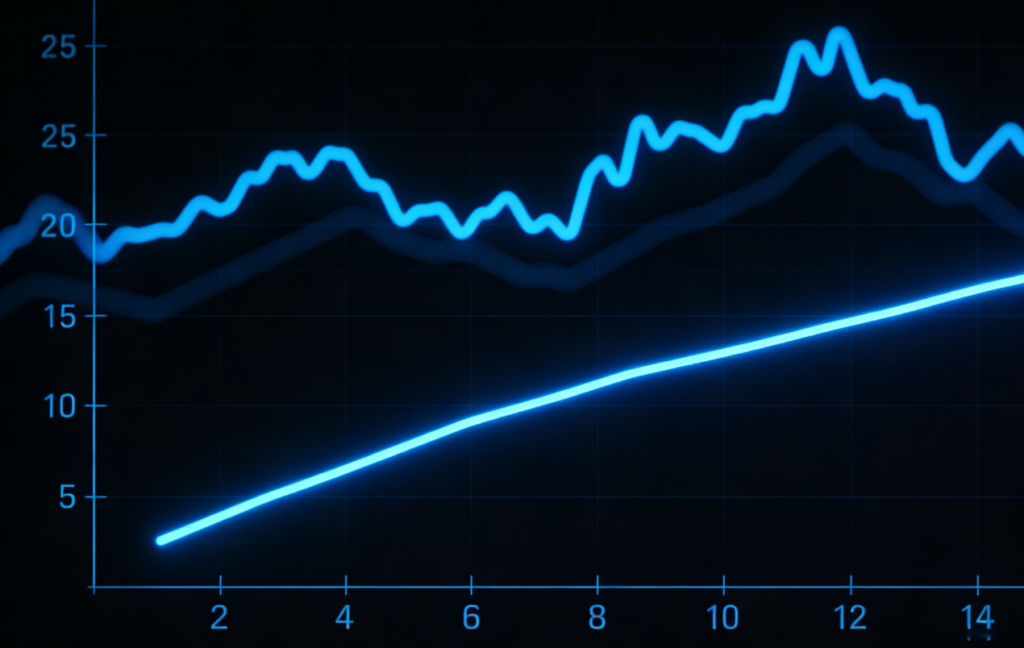
Volatility Is Historically Compressed
Using the 12‑week rolling annualized volatility of BTC.D as a gauge, the reading as of April 6 was approximately 5.8%. In the post‑2018 market environment, this is near the lower bound of its historical range, confirming an extremely compressed market regime.
Pre‑2018 data is less relevant because Bitcoin dominated nearly the entire market, mechanically suppressing volatility readings. The post‑2018 structure better reflects today’s multi‑asset crypto market, where shifts in dominance carry meaningful economic and capital flow implications.
Periods of such low volatility remain relatively rare in the current ecosystem. Examples include April 2019, December 2019, October 2023, and the extended low‑volatility phase from late 2025 to early 2026. These episodes are better understood as transitional phases rather than stable equilibria, where market dynamics pause before entering a new regime.
What Happens When Volatility Expands Again?
Historical analysis of shifts from low to high volatility in Bitcoin dominance reveals a consistent pattern in post‑2018 data. TOTAL2 — the total crypto market cap excluding Bitcoin, a proxy for altcoin performance — has typically delivered strong positive expected returns, often of considerable magnitude.
Over an 8‑ to 12‑week horizon, TOTAL2 has generally rallied between 30% and 90%. This suggests that volatility expansion tends to coincide with capital redeploying into the broader crypto market.
Bitcoin dominance itself has behaved unpredictably. In some instances, such as April 2019, dominance continued rising after volatility picked up. In others, including 2023 and 2024, BTC.D declined as capital rotated into alternative cryptocurrencies. Volatility expansion therefore does not reliably predict the direction of dominance.
Instead, it signals a broader shift in market structure. During low‑volatility periods, capital flows are highly coordinated and asset differentiation is minimal. When volatility reawakens, this uniformity breaks down, giving way to a more dispersed environment driven by idiosyncratic flows, sector‑specific narratives, and shifting positioning.

Dispersion, Not Direction
While relative performance between Bitcoin and altcoins fluctuates, the absolute return environment for both typically improves. Both Bitcoin and the wider altcoin market tend to post positive gains following these transitions, even as the identity of the market leader becomes uncertain.
The defining feature of the shift is thus not a directional call on dominance, but the return of dispersion — widening divergence in returns across the asset class.
Implications for Investors
Bitcoin’s current high dominance alongside historically low volatility represents a compressed market state, not a permanent equilibrium. History suggests this condition resolves through volatility expansion, triggering a shift in capital allocation dynamics.
Data shows TOTAL2 has generally performed strongly after volatility in Bitcoin dominance re‑expands. Whether this is followed by continued Bitcoin strength or a broad altcoin rotation depends on the subsequent path of dominance, which varies across cycles.
For institutional and retail crypto investors, the key is not to predict a single outcome, but to prepare for a shift in market structure. Low dominance volatility does not forecast market direction, but it does signal that opportunities are temporarily constrained. When the compression lifts, returns tend to expand and dispersion rises.
Rather than committing fully to a single narrative, investors may benefit from positioning for a more volatile, cross‑asset environment where relative value and sector selection drive performance more than outright market direction.