

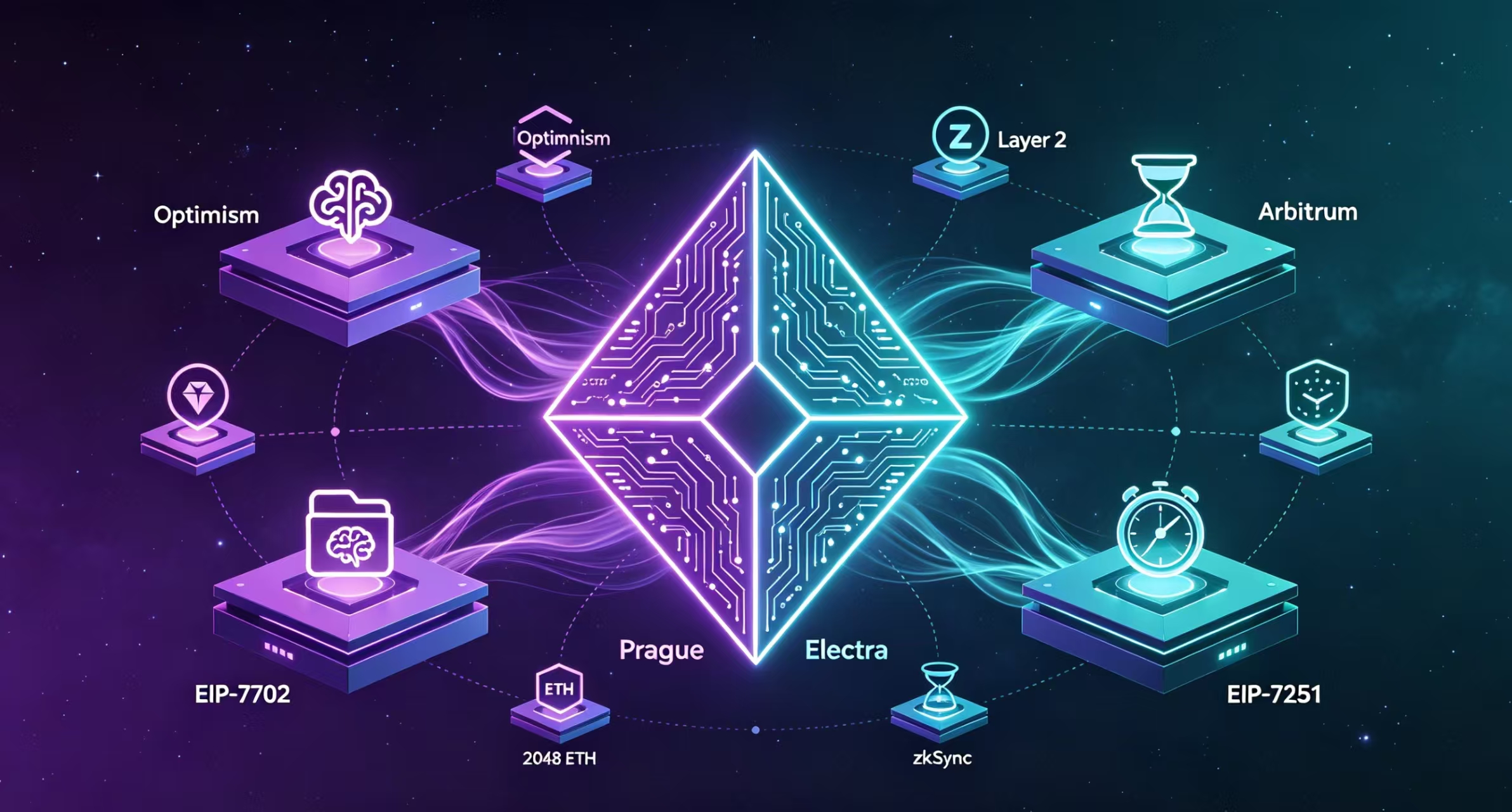
In-Depth Observation – While macro regulation reshapes the landscape, the underlying technology of crypto is undergoing a purge and consolidation from idealism to pragmatism. Ethereum, the world’s largest smart contract platform, is counting down to its next major upgrade, the “Pectra” hard fork, with the final testnet activation dates now locked in and the mainnet launch just months away. The core intent of this upgrade is unmistakable: to radically improve the user experience for ordinary wallet holders and alleviate the fragmentation problem that has long plagued the network.
“Pectra” comprises two parts, “Prague” (execution layer) and “Electra” (consensus layer), and includes several heavyweight improvement proposals. The most notable is EIP-7702, personally proposed by Ethereum co-founder Vitalik Buterin. This EIP allows ordinary externally owned accounts (like the MetaMask wallet addresses most users use) to temporarily gain smart contract functionality within a single transaction. This means a user can complete “approve + swap” in one step – a process that currently requires multiple clicks – and even allow a third party to pay the gas fees. It is seen as a critical step toward realizing account abstraction and lowering the Web3 entry barrier to “foolproof” levels.
Another major highlight is EIP-7251, which raises the maximum effective stake per validator node from 32 ETH to 2,048 ETH. This is not merely to encourage whales to accumulate; it is a cure for the network’s consensus bloat. Currently, the number of Ethereum validators has exceeded one million, causing excessive communication overhead for the base layer. By raising the per-node stake cap, the total number of active validators can be effectively reduced, boosting network synchronization efficiency.
As the mainnet steadily upgrades, Ethereum’s Layer 2 scaling legions are undergoing unprecedented explosive growth and internal competition. According to data from L2Beat, the total value locked (TVL) across the L2 ecosystem has hit a record high, but the top few networks command the vast majority of market share. With data storage fees (blobs) significantly reduced after the Dencun upgrade, a “liquidity fragmentation war” has broken out among major L2 networks. Several emerging L2 projects have even introduced negative-fee liquidity mining campaigns to poach users.
However, behind the prosperity lies a hidden worry. Vitalik Buterin has repeatedly warned publicly that the L2 ecosystem must adhere to the principle of “minimized trust.” He proposed a “Stage 1” classification standard, requiring any rollup claiming to inherit Ethereum’s security to have a functioning fraud-proof or validity-proof system and a security council in place. Currently, the vast majority of mainstream L2s are still in “Stage 0” – fully dependent on a centralized sequencer with training wheels. It is foreseeable that the data efficiency gains from the Pectra upgrade, combined with mandatory security standard enforcement, will accelerate a great wave of elimination. Only those infrastructures that strike a balance between user experience and decentralized security will ultimately survive. This also signals that the era of merely launching a token or a low-quality forked chain is coming to an end; the key to victory in tech competition has returned to the solidity of code and the completeness of the ecosystem.