

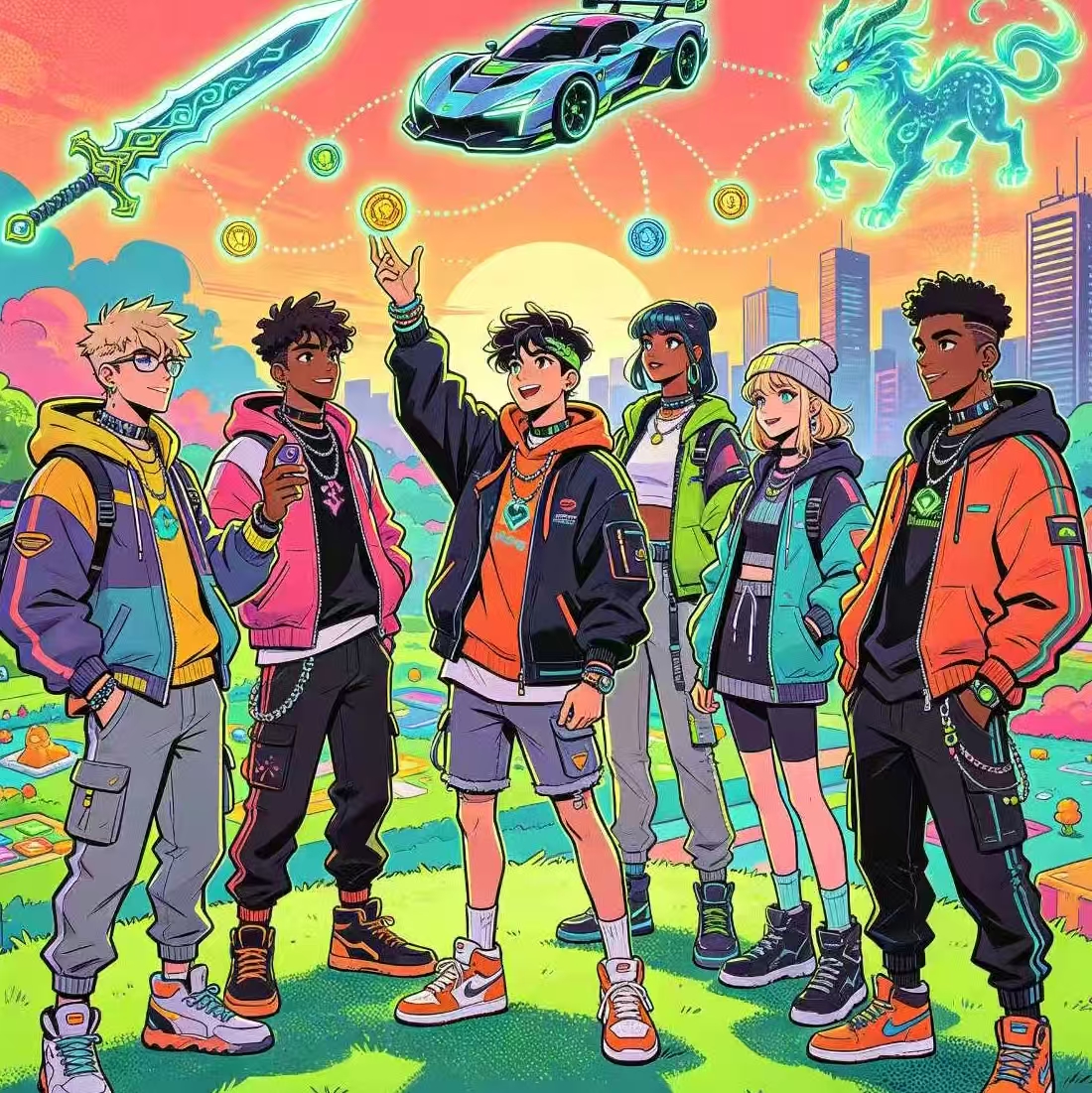
The early narrative of Web3 gaming was dominated by a single, powerful, and ultimately flawed idea: play-to-earn. Games like Axie Infinity promised players in developing countries a living wage through grinding digital tasks, creating a speculative bubble that peaked in 2021 and then spectacularly burst, leaving behind disillusioned communities and a tarnished reputation. But the story did not end there. Out of the ashes of that first cycle, a far more sophisticated and sustainable Web3 gaming ecosystem is emerging—one that prioritizes fun, integrates digital ownership seamlessly, and is giving rise to a new creative economy that extends well beyond the games themselves.
The maturation of Web3 gaming rests on a fundamental philosophical correction. The new generation of blockchain games starts with a simple premise: a game must be a good game first. Titles like Shrapnel, a AAA first-person extraction shooter, and Parallel, a sci-fi trading card game, are built by teams with deep experience in traditional gaming from studios like Ubisoft, Electronic Arts, and Blizzard. The blockchain layer—used for ownership of in-game assets, interoperability, and player-driven economies—is not the primary selling point; it is an enhancement to an already polished gameplay experience. This shift from “financialization-first” to “entertainment-first” is critical to attracting and retaining players who are not crypto-native speculators but gamers seeking immersive worlds.
At the heart of this new paradigm is the concept of true digital ownership. In traditional gaming, the billions of dollars spent on skins, weapons, characters, and virtual land are effectively locked inside the publisher’s database. If a game shuts down, those assets vanish. If a player is banned, they lose everything. Blockchain technology, through non-fungible tokens (NFTs), allows these in-game items to exist as player-owned assets on a decentralized ledger. A sword won in a dungeon can be taken out of the game, displayed in a player’s wallet, sold on a marketplace, loaned to another player through a smart contract, or even used in a different game if the developers choose to support interoperability. This transforms virtual goods from ephemeral licenses into durable property, with profound implications for how players value their time and creativity.
This ownership model has given rise to an entire creative economy that lives around the games. Modders, traditionally unpaid enthusiasts who extend the life of games through custom content, can now be compensated directly and fairly. A 3D artist can design and sell avatar skins that are tokenized, earning royalties on every secondary sale forever. A guild of players can pool resources, purchase virtual real estate, and govern it collectively through a DAO, sharing the revenue generated from in-game events or advertising. This blurs the line between player, creator, and entrepreneur, giving rise to a new lifestyle where playing a game is also a form of creative work and investment—but without the exploitative grind of the early play-to-earn models.
The emergence of gaming guilds and decentralized esports is another significant development. Guilds like Yield Guild Games have evolved from speculative scholarship programs into professional organizations that provide training, equipment lending, and community support for players. They are akin to talent incubators for the digital gaming economy, identifying skilled players in underserved regions and providing them with the resources to compete and earn. Tournaments and leagues with on-chain prize pools, transparent governance, and token-based fan ownership are beginning to challenge traditional esports structures, giving fans a direct stake in the success of their favorite teams and players.
From a lifestyle perspective, Web3 gaming is enabling a new kind of digital nomadism. There are now individuals who earn a full-time living not just by playing games, but by providing services within game economies: as virtual real estate developers, game item asset managers, lore writers, community moderators, and governance strategists. They often work across multiple games and platforms, earning tokens and stablecoins that they manage through self-custody wallets. Their work is global, asynchronous, and deeply embedded in online communities. It requires a mix of gaming skills, financial literacy, and social intelligence—a combination that is increasingly being recognized as a legitimate career path, particularly among younger generations.
The economic impact of this maturing ecosystem is measurable. High-quality blockchain games are attracting investment from traditional venture capital and gaming industry giants alike. As the infrastructure improves—with faster, cheaper layer-2 blockchains, seamless wallet integration, and gas-free transactions—the friction that plagued early Web3 games is rapidly disappearing. The result is a user experience that feels indistinguishable from a traditional game, but with the added layer of ownership and value capture. Analysts project that Web3 gaming will be a significant driver of mainstream blockchain adoption over the next five years, as the line between gaming and decentralized finance continues to dissolve.
There are, of course, remaining challenges. The gaming community retains a deep skepticism of NFTs, fueled by the excesses of the previous cycle and the perception that crypto integration is a cash grab. Regulatory uncertainty around whether in-game tokens constitute securities also looms. However, the projects that are succeeding are doing so by building genuine community trust, delivering quality gameplay, and using blockchain technology in a subtle, almost invisible way—often described as “invisible Web3.” In these games, players may not even know they are using a blockchain, but they benefit from true ownership and open economic systems nonetheless.
The new Web3 gaming paradigm is not about escaping reality to earn a token; it is about enhancing reality with verifiable ownership, creative agency, and a more equitable economic model for the time and passion that players invest. It is a vision of play as not just a leisure activity, but a meaningful, productive, and creative part of life—one that might just redefine the relationship between work and play for the digital generation.