

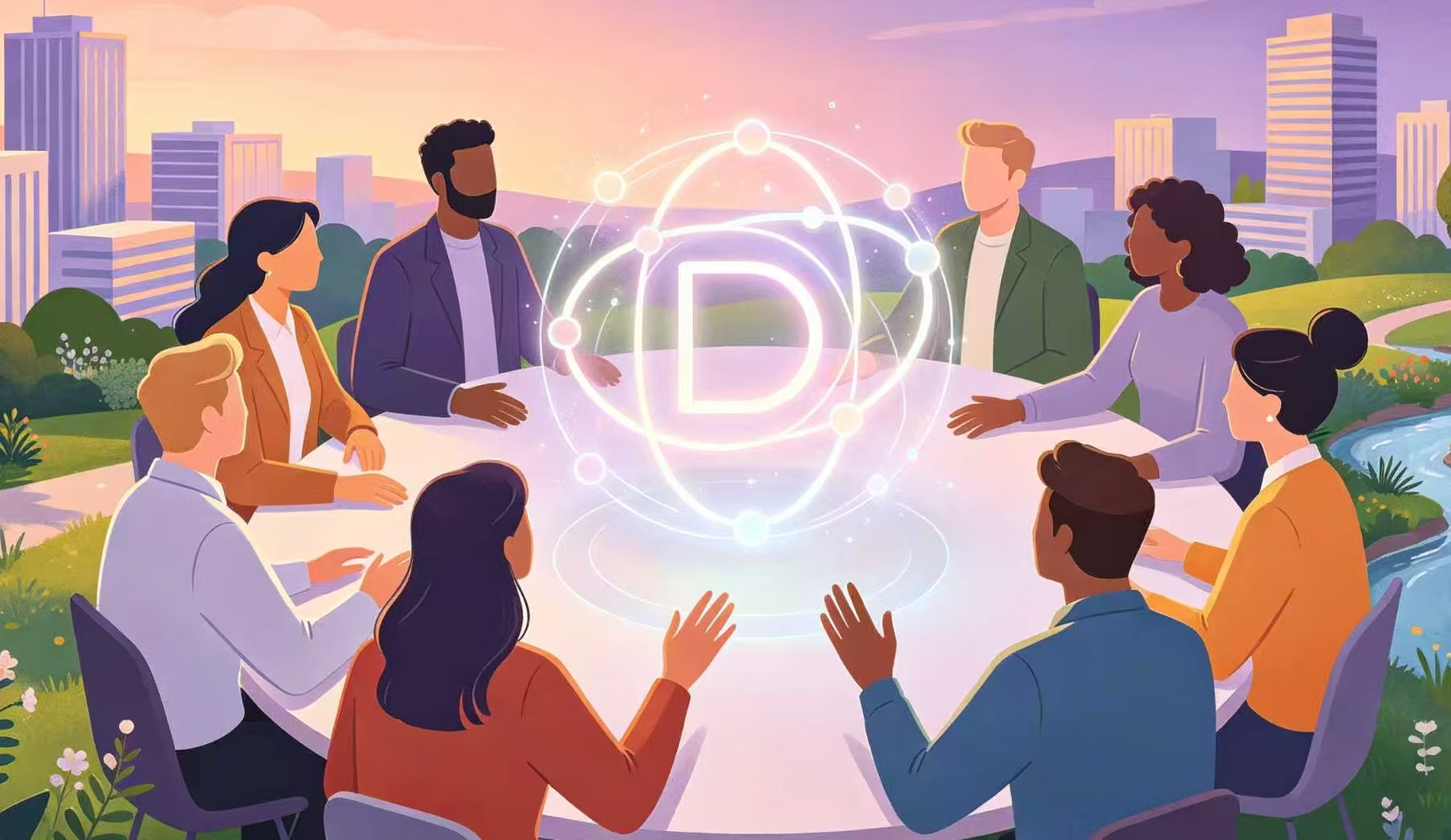
For most of modern history, the structure of work has been rigidly defined. A company has a headquarters, a CEO, managers, and employees who trade time for a salary. Decisions flow from the top down. The idea that you could work with hundreds of people around the world, without a boss, without an office, and without a formal employment contract, and collectively manage millions of dollars in assets, would have seemed absurd just a decade ago. Yet this is precisely what is happening through Decentralized Autonomous Organizations, or DAOs, and it is quietly birthing a new generation of digital-first workers, creators, and investors who are rethinking what a career and a community can look like.
A DAO is an internet-native organization governed by smart contracts on a blockchain. Its rules are transparent, encoded in software, and enforced automatically. Decisions are made not by a board of directors, but by token holders who vote on proposals. Contributions can come from anywhere, and compensation is often distributed in tokens that represent both economic rights and governance power. The result is a fluid, global, and meritocratic structure where anyone with an internet connection and relevant skills can participate, and where the boundaries between work, ownership, and community blur into something new.
The diversity of DAOs operating today is staggering. There are investment DAOs like PleasrDAO, which pools funds from members to acquire culturally significant NFTs and artwork, democratizing access to high-value collecting. There are service DAOs like Gitcoin, where developers and creatives contribute to open-source projects and public goods funding. There are social DAOs like Friends With Benefits, a token-gated community of artists, thinkers, and builders that functions as a kind of decentralized city, complete with its own cultural events, editorial outlets, and incubator programs. There are even media DAOs and philanthropic DAOs, proving that almost any human coordination problem can be redesigned around decentralized governance.
What attracts people to the DAO lifestyle is not just the novelty, but a set of deeply held values: autonomy, transparency, and shared ownership. In a traditional company, your contributions are often invisible, your equity is negligible or non-existent, and your voice in strategic decisions is limited. In a DAO, because contributions are recorded on-chain, they are visible and auditable. Compensation can be tied directly to the value you create, and governance tokens give you a real stake in the direction of the organization. This alignment of incentives creates a powerful sense of agency and belonging. It is a form of creative living where your work and your investments are intertwined, and where you can build a portfolio career across multiple DAOs simultaneously.
The wealth management implications are also novel. A DAO contributor might earn a stablecoin salary for development work, receive governance tokens in a social DAO for community building, and own a slice of an investment DAO that appreciates over time. Managing this mosaic of assets requires a new kind of financial literacy—one that blends DeFi, token vesting schedules, voting power delegation, and tax planning across jurisdictions. The DAO generation is not just earning money; it is learning to steward shared capital, vote on grant allocations, and collectively decide on treasury investments. This is a far cry from the passive consumer-investor model of the 20th century; it is an active, engaged form of wealth management where participation is the product.
The lifestyle benefits are equally compelling. DAOs are natively remote and asynchronous, making them accessible to parents, people with disabilities, and those living outside major economic hubs. They can offer a sense of purpose and community that traditional freelance platforms lack, because members are not just gig workers but co-owners of the organization. Many DAO contributors describe their experience as closer to being part of a cooperative or a guild than a traditional job. The camaraderie, the shared mission, and the ability to work on something you genuinely care about, with people from every continent, is a powerful antidote to the isolation and meaninglessness that often accompany conventional employment.
To be sure, the DAO landscape is far from perfect. Governance can be messy, with low voter turnout and the risk of plutocracy if token holdings are concentrated. Legal ambiguity around DAO liabilities, employment law, and taxation persists. Coordinating large groups of pseudonymous strangers is inherently challenging, and many DAOs have struggled with internal conflict, inefficiency, and even treasury raids. Yet these growing pains are part of the experiment. Each failure produces lessons that are encoded into better governance frameworks, improved smart contract templates, and more robust community norms.
The DAO generation is not predicting the end of traditional companies, but it is proving that a viable alternative exists. It is a model that prizes flexibility over stability, ownership over employment, and community over hierarchy. For those willing to embrace the uncertainty, it offers a glimpse of a future where work is not a place you go, but a network you belong to; where your income is not a single salary, but a rich, diversified stream of assets and tokens; and where the line between making a living and building a community dissolves entirely. This is the quiet revolution of the DAO, and it is only just beginning.