

The Market Trades 24/7, But Capital Does Not
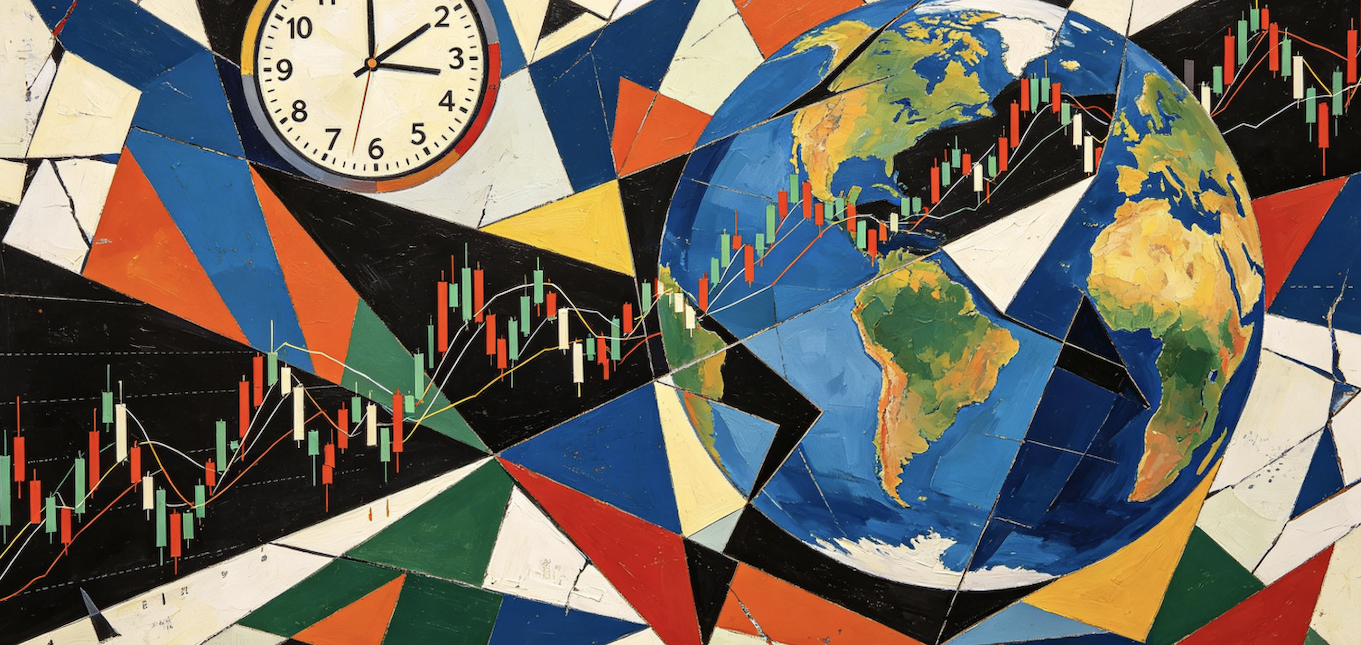
The crypto market runs round-the-clock all year long, yet global capital does not flow evenly at all times.
Liquidity is always concentrated in specific regions at different hours. Asia, Europe and the U.S. each have distinct market participants, risk appetites and macro focuses. Although the chart appears as one continuous market, it actually operates like a global capital relay. Capital flows from one time zone to the next, carrying over existing positions, pricing in new information, and rebalancing risk exposure.
This rotational flow dictates real market movements. Crypto is no longer isolated; it is fully integrated into the global financial system and reacts in real time to capital flows from stocks, indices and broader macro markets.
Asia Builds Ranges, The U.S. Sets Trends
The trading day starts with the Asian session, where liquidity first flows into Japan, Hong Kong and South Korea. Regional ETFs such as EWJ and Korea MSCI ETF reflect local market sentiment, driven by exchange rate swings, export data and regional risk conditions.
Price action tends to be steady in Asia, with trading ranges gradually forming while market consensus remains undecided. The trend is clean but overall market participation is relatively low.
When Europe opens, positions built in the Asian session are put to the test. European capital reacts to macro factors including energy prices, inflation expectations and currency moves. Correlations between global indices strengthen, and established ranges are often expanded or broken.
The U.S. session brings the world’s largest pool of capital. Fund flows around flagship vehicles like SPY and QQQ dominate global risk reallocation. Large tech performance, rate expectations and key macro data drive directional moves. Most trends are confirmed, reversed or accelerated during U.S. trading hours.
Crypto moves in strong sync with this global time zone structure, with liquidity and volatility spiking during these key sessions.
Overlapping Trading Hours Drive Major Moves
The most influential market periods are not standalone sessions, but the overlapping trading windows between major regions.
During the Europe-U.S. overlap, global liquidity and trading volume hit daily peaks, and crypto responds sharply. Breakouts are more decisive, reversals faster, and cross-asset correlations far stronger.
In these overlapping hours, Nasdaq flows, index futures and macro indicators move in tandem. Crypto no longer leads independently; it is deeply embedded into the global capital pricing mechanism.
Crypto Is Integrated Into Global Capital Circulation
Crypto is often viewed as a standalone market, but it increasingly mirrors real global capital flows.
Trading behaviors differ across time zones: the U.S. session sets directional consensus, while Asia favors accumulation and position redistribution. Market swings are not random volatility — they are essentially capital rotation responding to both local fundamentals and global macro signals.
True Edge: Understand Who Is Trading, Not Just Price Action
Most traders focus solely on price patterns and technical structures, while ignoring market participants and capital structure.
Understanding the global liquidity map reshapes trading logic: shifting focus from chart patterns to capital flows, and from technical indicators to real institutional behavior. The key question is no longer merely “where will price go next”, but who is driving the market now, what catalysts they are reacting to, and how much real capital is behind the move. This analytical edge compounds significantly over time.
Future Trends
As crypto and traditional finance continue to converge, liquidity cycles across time zones become more correlated. Equities, indices and crypto increasingly respond to the same macro drivers simultaneously. Asset boundaries blur, and market moves are unified by global capital flows.
Flipster builds an all-in-one multi-asset trading ecosystem, enabling users to trade crypto, equities, S&P 500, Nasdaq and global regional indices on a single platform. Traders can align their execution with real global liquidity rhythms.
Meanwhile, capital efficiency is evolving. Funds no longer need to sit idle between trades or across time zones. New market structures keep capital deployed and active at all times, boosting efficiency beyond simple entry and exit timing.