


Cryptocurrencies such as Bitcoin and Ethereum are powered by a technology called blockchain. Simply put, a blockchain is a publicly viewable and verifiable list of transactions. For example, the Bitcoin blockchain records every instance of Bitcoin being sent or received.Cryptocurrencies and the underlying blockchain technology enable value to be transferred online without intermediaries like banks or credit card companies.
Imagine a global, open alternative to nearly all the financial services you use today — accessible with just a smartphone and an internet connection.
- The transaction list stored on a blockchain is essential for most cryptocurrencies, as it allows payments between strangers without third-party verification from banks.
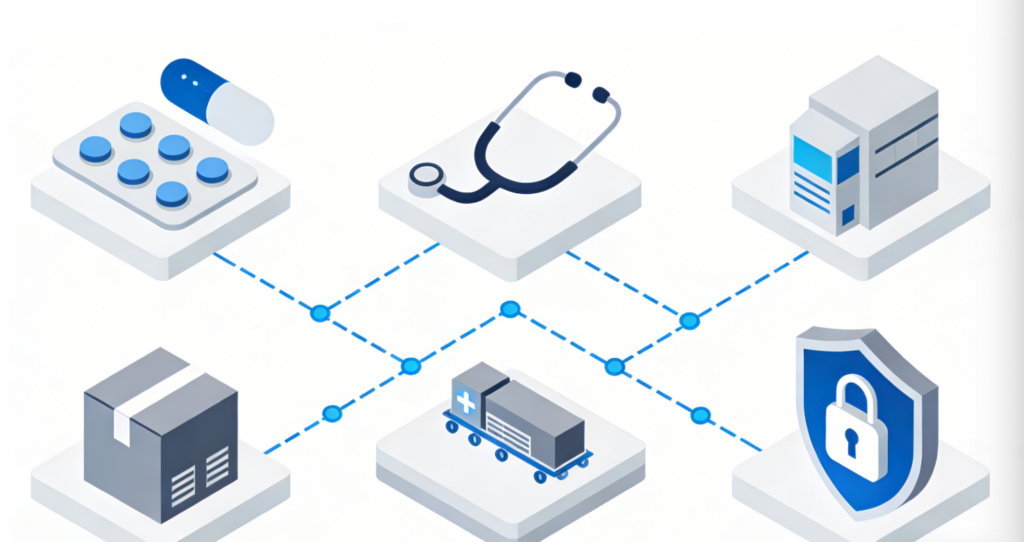
- Blockchain is also exciting because it has many uses beyond cryptocurrency. It is being explored for medical research, improving the sharing of health records, streamlining supply chains, enhancing online privacy, and more.

What are the advantages of blockchain?
- Global reach: Cryptocurrencies can be sent anywhere in the world.
- Transparency: Every transaction on a cryptocurrency network is publicly recorded on the blockchain, so anyone can audit it. This leaves little room for manipulating transactions, altering the money supply, or changing rules mid-operation. The core software behind Bitcoin is free and open-source, so anyone can inspect the code.
Key Questions
What is the main advantage of blockchain over traditional finance?
So much of our financial life — from shopping to investing — happens online, and every transaction relies on a middleman such as a bank, credit card company, or payment processor like PayPal. Blockchain allows these transactions to occur without intermediaries, and without the extra costs and complexity that come with them.
Is Bitcoin the same as blockchain?
Bitcoin is a digital currency. Blockchain is the technology that makes it possible.
How many blockchains exist?
There are thousands supporting cryptocurrencies like Bitcoin, Litecoin, Tezos, and many others — plus a growing number of blockchains unrelated to digital currencies.
How does blockchain work?
Think of a chain used as an anchor. In this case, each link in the chain is a block of transaction data. Near the top of the chain, you see recent activity; as you go down, you see older transactions. Follow it all the way to the bottom, and you see every transaction in the cryptocurrency’s history.This gives blockchain strong security: it maintains a complete, transparent history. If someone tries to alter a transaction, the chain “breaks,” and the entire network detects it.
Blockchain is often described as a ledger (sometimes called a distributed or immutable ledger), similar to a bank’s balance sheet. Like a bank’s ledger, it tracks all money flowing in, out, and through the network.
Unlike a bank’s records, however, a cryptocurrency blockchain is not maintained by any single person or organization — not banks, not governments. It is fully decentralized, maintained by a large peer-to-peer network of computers running open-source software. The network continuously checks and verifies the accuracy of the blockchain.
Where do new cryptocurrencies come from?
At regular intervals — about every 10 minutes for Bitcoin — a new batch of transaction data (a new block) is added to the existing chain. To reward participants for contributing computing power to maintain the network, the system gives them small amounts of cryptocurrency.
The blockchain is spread across the entire network. No company, country, or third party controls it; anyone can participate.
Key Questions
How do you send and receive money using blockchain?
A cryptocurrency network assigns each user a unique “address” made up of a public key and a private key. Anyone can send you funds using your public key, similar to an email address. When you want to spend money, you digitally sign the transaction with your private key — essentially a password.Cryptocurrency is managed using software called a wallet, available through platforms like Coinbase.
Who invented blockchain?
In late 2008, a person or group using the name Satoshi Nakamoto published a whitepaper online explaining a new digital currency called Bitcoin. Every cryptocurrency since has evolved from these ideas.
- Satoshi’s goal was to create a digital currency that allowed two strangers anywhere in the world to trade online without third parties like credit card companies or payment processors such as PayPal.
- This required solving the problem of double spending, where someone could spend the same money more than once. The solution was a network that continuously verifies where Bitcoin moves — that network is the blockchain.
- Every Bitcoin transaction is stored and verified by a global network of computers, beyond the control of any person, company, or country.
- The database holding all this information is the blockchain. Bitcoin is “mined” by a large decentralized network that also constantly validates the chain. Miners are rewarded with small amounts of Bitcoin for contributing computing power.
- Every Bitcoin transaction appears on the ledger, with new information periodically grouped into a “block” and added to all previous blocks.
- The collective computing power of miners ensures the accuracy of the ever-growing ledger. Bitcoin and blockchain are inseparable: every new Bitcoin and every subsequent transaction is recorded on it.
The future of blockchain
Blockchain has proven to be a platform on which countless applications can be built. It is still an emerging and fast-evolving technology, but many experts believe it has the potential to transform how we live and work, much like early internet protocols such as HTML.
- Blockchains like Bitcoin Cash and Litecoin work very similarly to the original Bitcoin blockchain.
- Ethereum expands the idea of a distributed ledger: unlike Bitcoin, it was designed for more than just managing digital currency. Ether is a cryptocurrency that can send value, but Ethereum also acts as a powerful, flexible computing platform that lets developers easily build a wide range of applications.